
Photos by Foundation for Freedom
Ruslan, Hassan, and Mustafa love wrestling. The 11-year-old friends live in the Linin residential facility for displaced people in rural Poland. They wrestle at a training center about five kilometers away. Because they have no easy way to get there, the boys use a novel mode of transportation: They roller skate to wrestling practice. When we first heard this story, we were impressed by their energy and determination, but then we learned that the boys skate down a perilously narrow country road to get to the gym. It’s not a safe way for these children to travel.
When we talk about the challenges of displacement, we don’t necessarily consider the smaller inconveniences that make life grueling, difficult, and even dangerous. Hawwa, a mother of seven who lives at Linin, needed to get to her son’s school for a parent-teacher conference, but the bus didn’t run in the evening. Hawwa ended up taking a taxi, which cost her $20, a quarter of her monthly stipend. About 80 people live at the Linin center and they come from many troubled places, including Sudan, Somalia, Afghanistan, and the Chechnya region of Russia. Clearly, they need better transportation to help them move on with their lives. Better yet, Poland should stop locating refugees in such isolated areas.
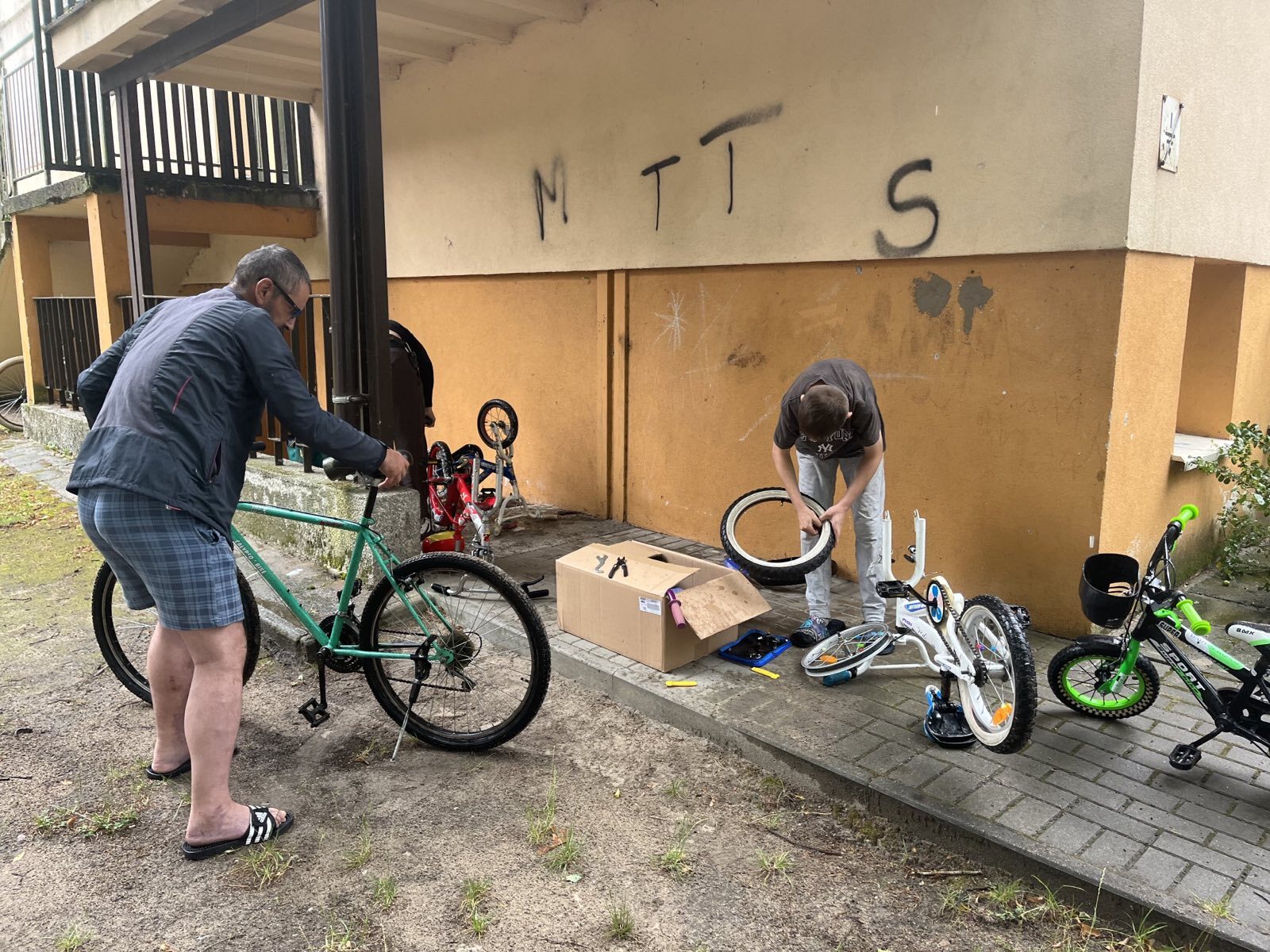
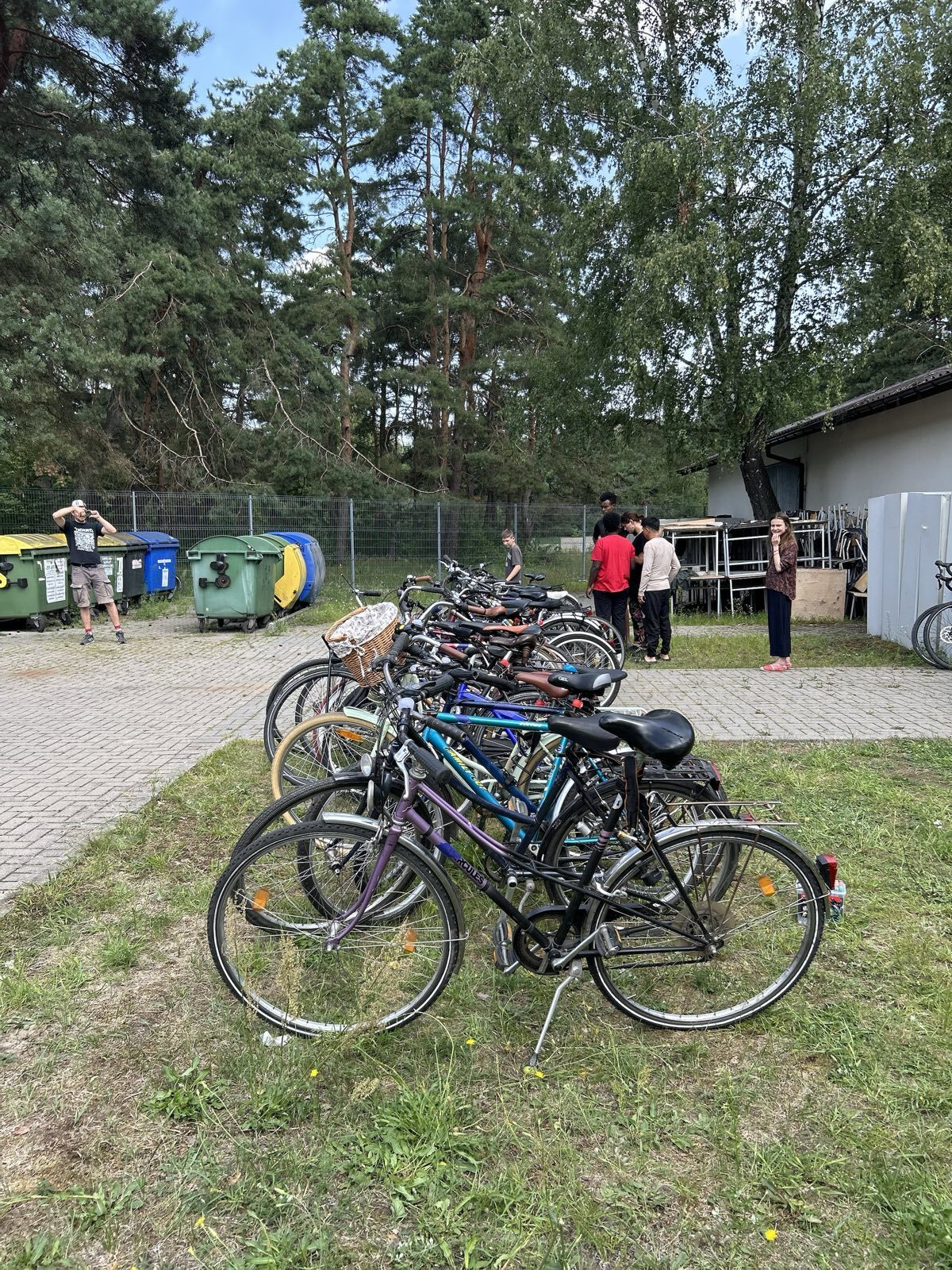
Humanity Now doesn’t have enough money to pay for a better bus system in rural Poland, but we are focusing on the things we can do to make life easier for the residents. We helped the Foundation for Freedom, a Polish charity, provide new bikes and a bike-repair workshop for residents of Linin. The program is called “Bikes for Freedom” because, as Krzysztof Jarymowicz, the foundation’s director, explained, “We believe that bikes are tools that really give back agency to the people who can eventually shop, learn, work or entertain more freely.”
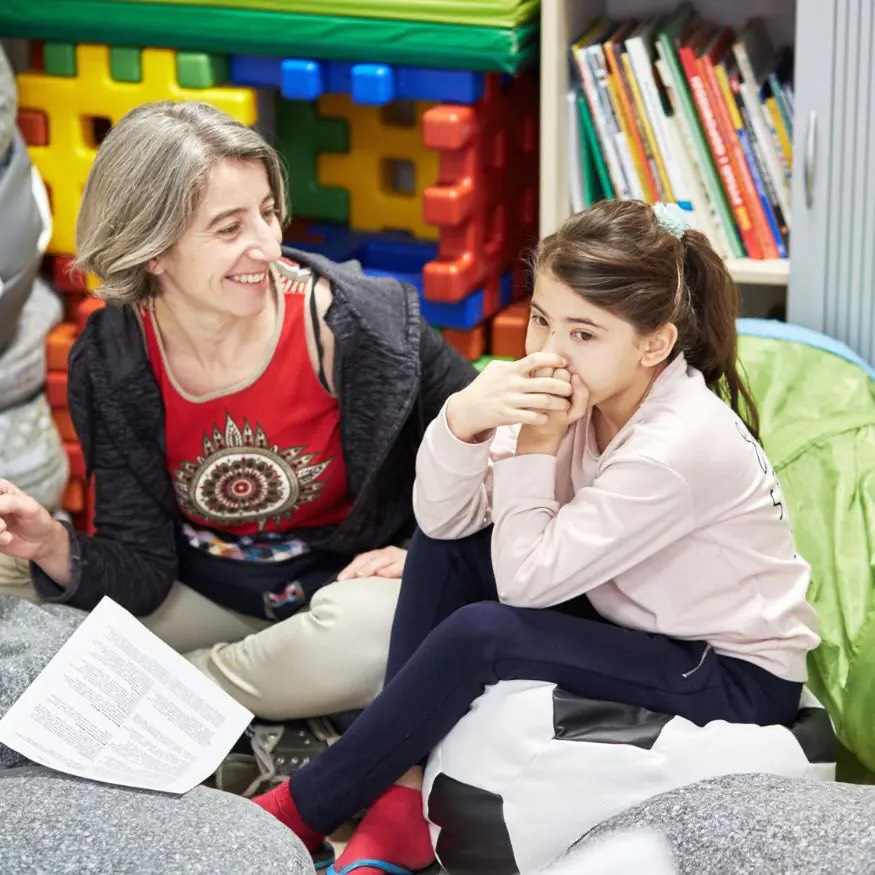
We are also helping to support Foundation for Freedom’s children’s activity center at the Linin facility. It’s a safe space where children can make art, play games and sports, learn Polish, and have fun. The center benefits parents, too, by arranging medical visits, setting up meetings with asylum lawyers, and even giving advice on local preschools. Every week, up to 30 children and 30 adults use the space, which also provides free clothing. The goal, our partners tell us, is to make sure these parents smile “at least once a day.”
It’s easy to get discouraged by conditions that refugees endure, but even small investments can do a huge amount to help. “When I first got to the refugee center, I didn’t even want to leave my room,” says Chabuka, one of the Linin residents, about Foundation for Freedom’s program. “I truly believe I wouldn’t be where I am today without the opportunity you gave me. It has truly changed my life.”
We Recommend:
When Monica recommended the National Book Award Finalist When Stars are Scattered, Dana wasn’t immediately interested in reading a graphic novel for children. Once she started it, though, she raced through it in a single afternoon, riveted by the story of two young Somali brothers growing up without their parents in Dadaab, the largest refugee camp in the world. Written by Omar Mohamad and graphic novelist Victoria Jamieson, the book tells the true story of Omar’s childhood in the camp. It offers a vivid portrait of Dadaab as a crowded, barren place where orphaned children sleep alone in huts without adequate clothing or food. Despite these hardships, the boys still find joy and Omar dares to dream of getting an education. It’s a story of loss and love and family—not just families connected by blood, but the families that strangers create, learning to rely on each other in order to survive.

