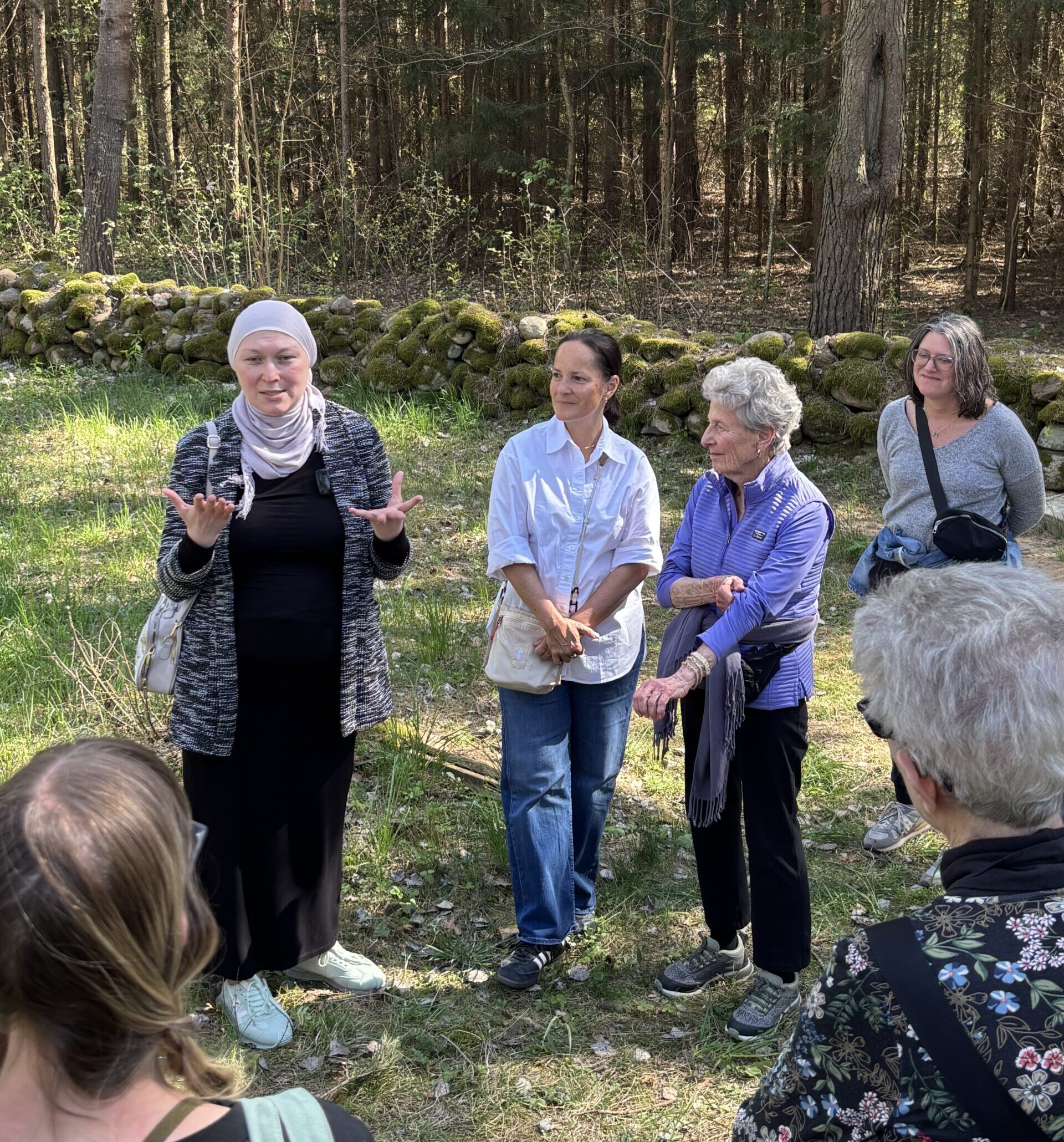
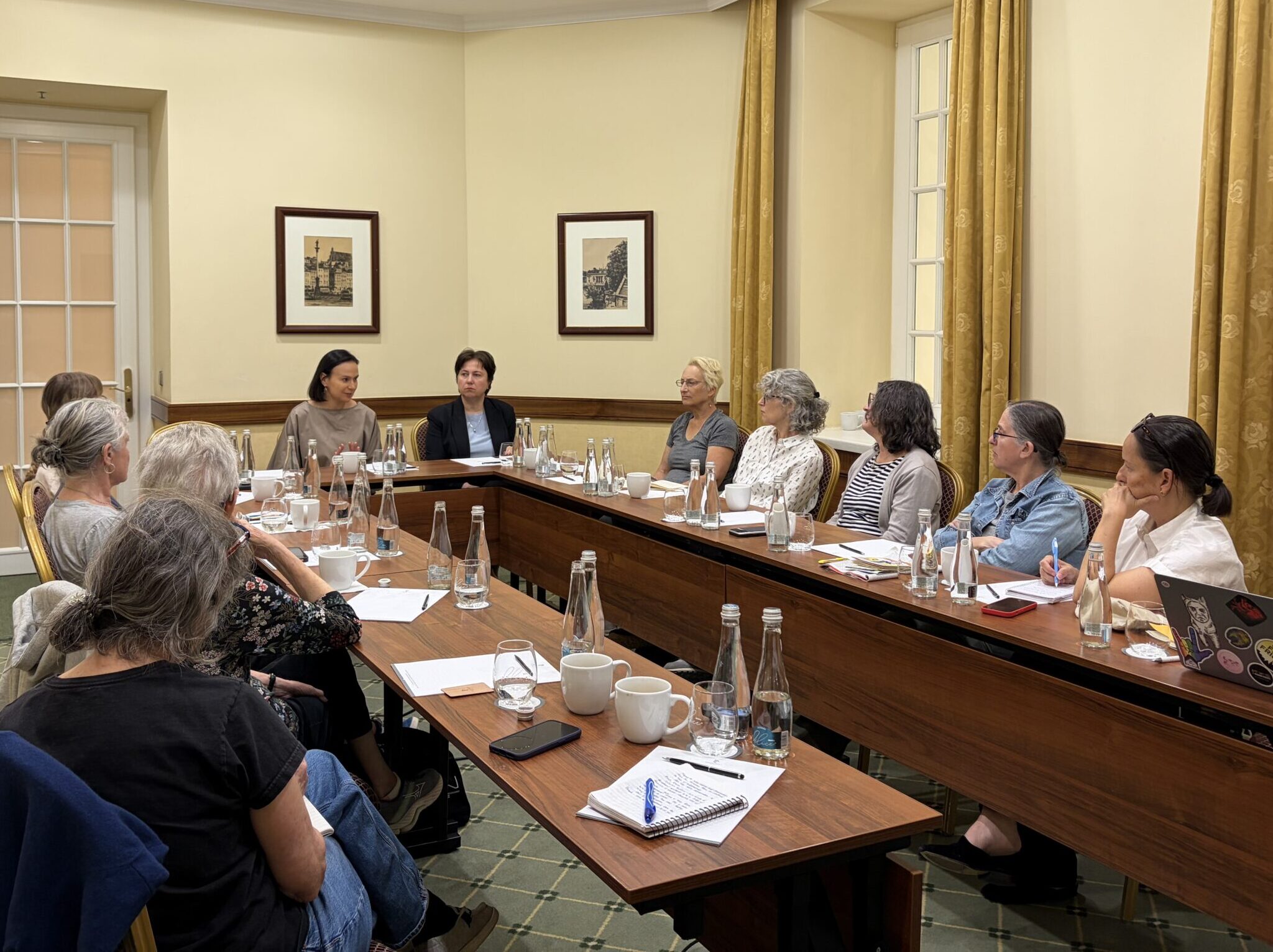
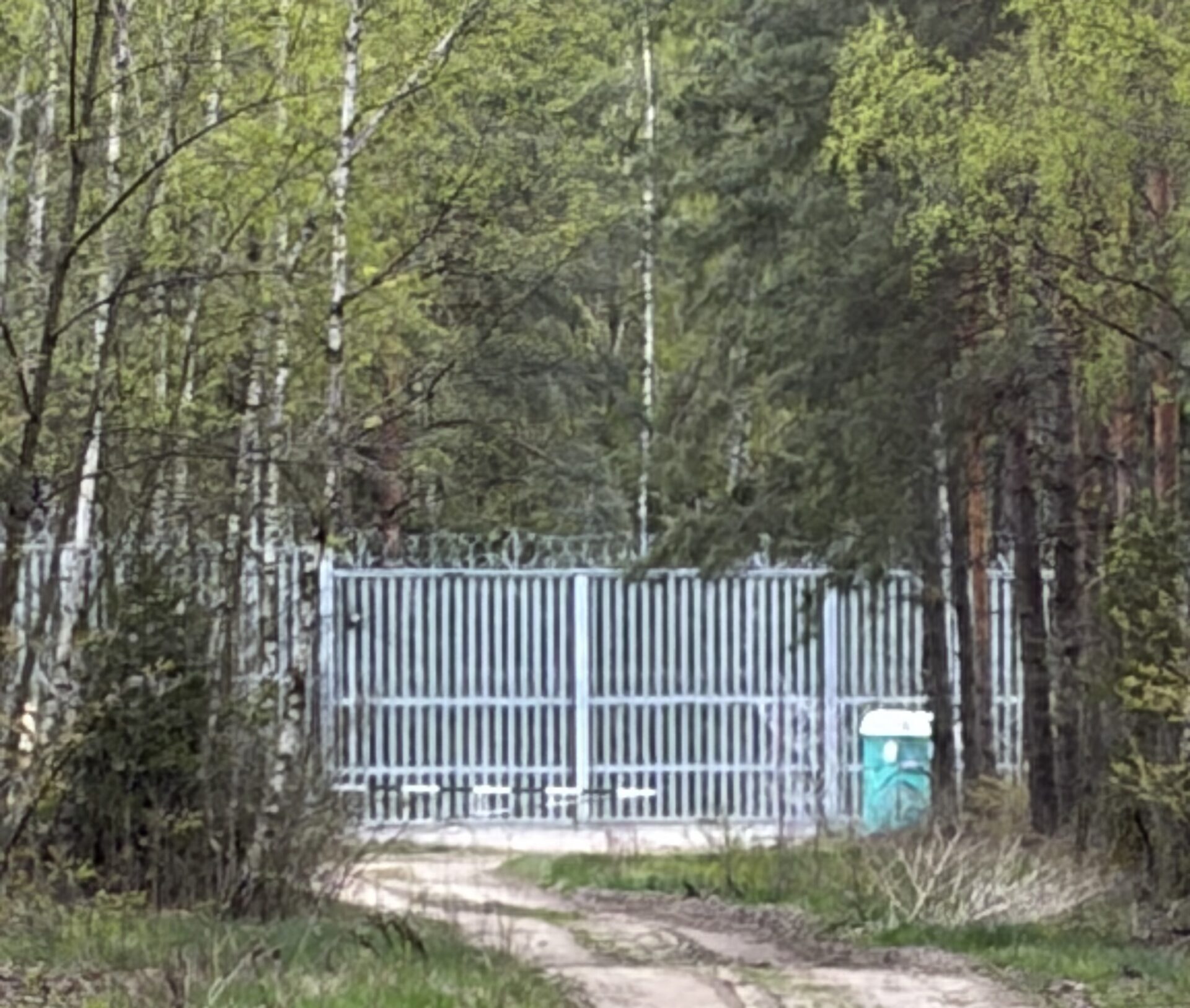
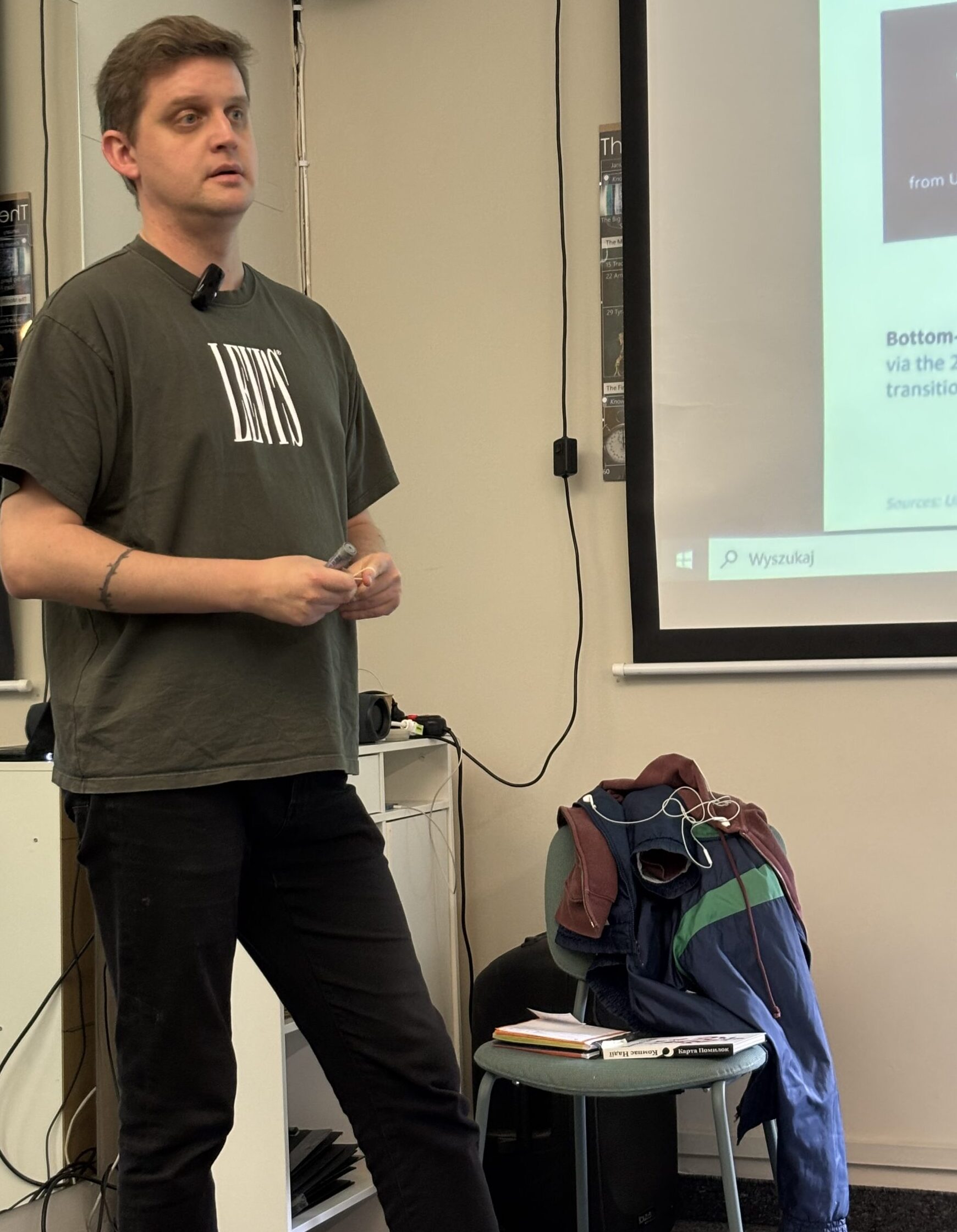

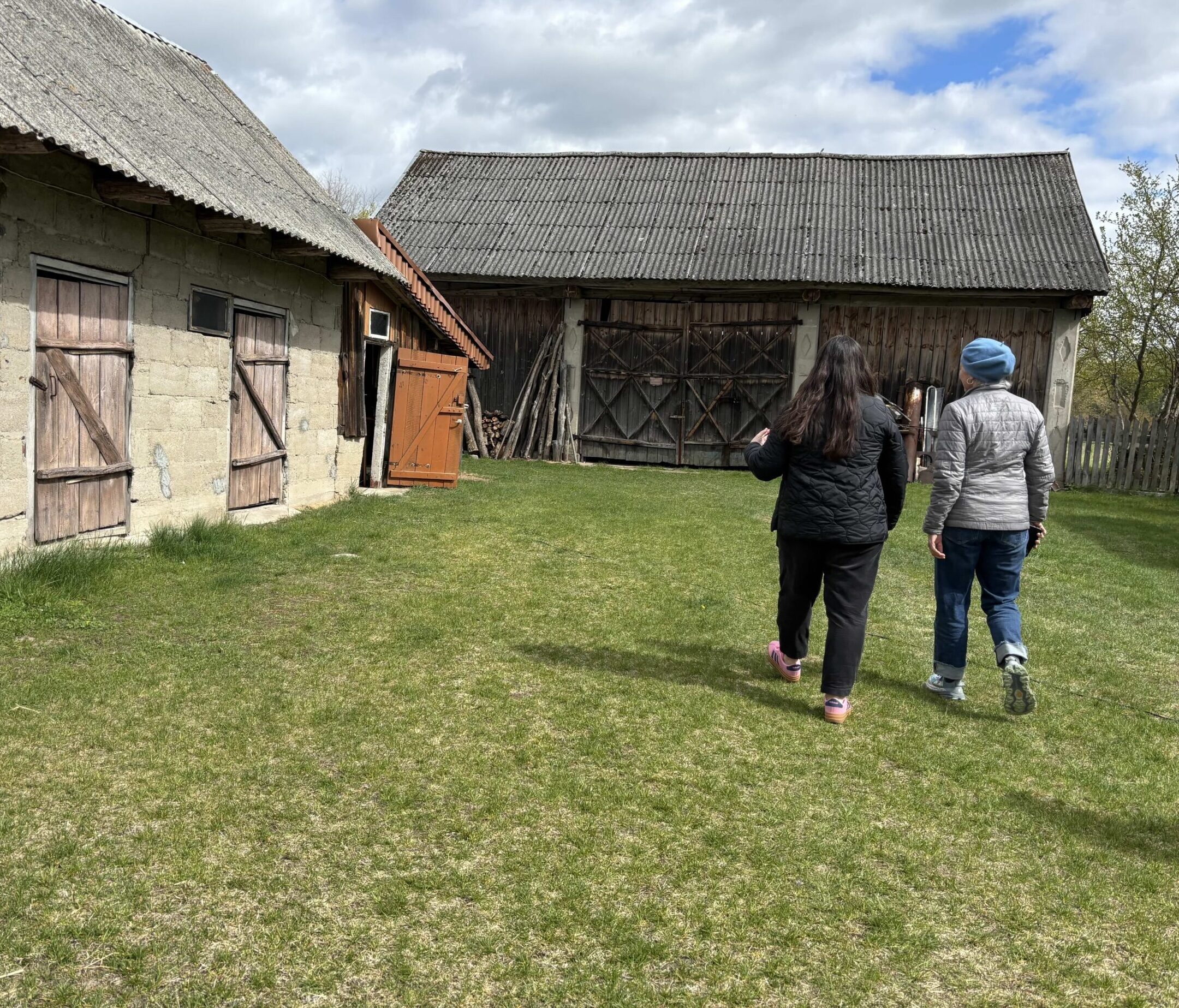
From top: A quiet pause to learn about Poland’s Muslim Tatar minority from Dagmara of the Pol Foundation; a meeting with Foundation Towards Dialogue in Warsaw; New fencing along the Poland-Belarus border has created a lot of human suffering; Karol gave a lecture on migration to Poland; the beauty of Krakow; near the border with Belarus.
About 18 months ago, our friend Karol Wilczyński had a suggestion. Karol founded the Krakow-based Pol Foundation, a Humanity Now partner helping migrants and refugees. Over the years, he’s given us great advice about the humanitarian situation and how we can use our funds most effectively. When he has a suggestion, we listen.
“Why don’t you invite donors to join you on one of your trips?” he asked. As Karol saw it, “People can best understand the challenges here if they see it for themselves.”
Last month, eight American donors met us in Krakow. After a few days exploring the city, including a visit to the Auschwitz-Birkenau Memorial nearby, we continued to Bialystok, the Podlasie Region bordering Belarus, and Warsaw. Along the way, we met with humanitarian professionals and aid recipients.
As you can see from our photos, we had a lot of fun. We had serious conversation, too, as we grappled with the issues facing immigrants, refugees, and war victims struggling to survive in this region and in Ukraine.
Now that we’re home, our travel companions tell us that they found the trip deeply meaningful and they learned a lot. Bobye List, a retired nonprofit executive, said, “I felt like I was getting a better idea of what humanitarian aid workers are about.” She described them as “individuals who can be comfortable operating in an unstable environment and yet find ways to be responsive, effective and always compassionate.”
One of our guests, Diane Sachs (yes, Dana’s mom!) told us that the visit to Auschwitz added resonance to our meetings with humanitarian workers. “One of my take-aways from the trip was that humans can be unbelievably evil,” she told us. “But also, the people we met who were doing such amazing work for the refugees [are] incredibly kind and giving.”
We’re now planning a second donor trip next year—most likely visiting aid partners in Greece. We’ll be in touch again as our plans come together. Let us know if you’re interested!
We Recommend:
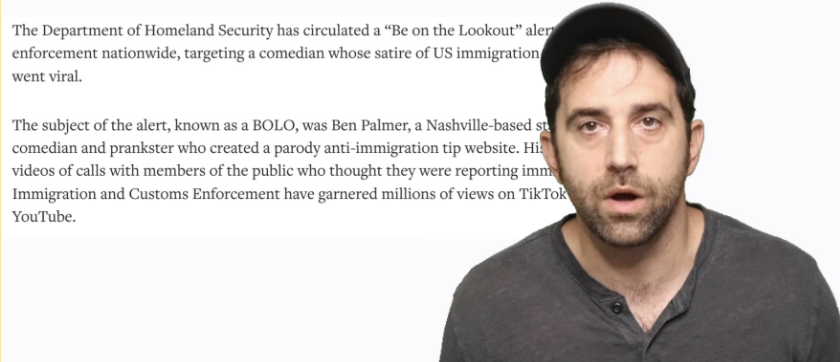
The comedian Ben Palmer created a fake tip line for people wanting to deport undocumented immigrants. The callers believe the site is real, and when they reach Palmer, who poses as an “agent,” they ask him to investigate people they suspect are in this country illegally. One woman is bothered by a neighbor who keeps odd hours. “He’ll come like a thief in the night,” she tells Palmer, who suggests that she’s bothered by “not being able to see what the resident is doing in their own home.” Another caller wants an investigation of a store employee who can’t speak English. Yet another voices concern about the parents of a kindergartener at the school where she works. “I’m not into illegal people being here,” she says. The conversations, which have gone viral on YouTube, are funny, awkward, and disturbing because they offer an unvarnished glimpse into the attitudes of people who support mass deportation. In response to the success of the parody, the Department of Homeland Security has issued an “alert” on Ben Palmer, who seems to be taking the attention in stride. “In my line of work,” he told The Guardian, “I always look at these things as more like certificates, badges of honor,”