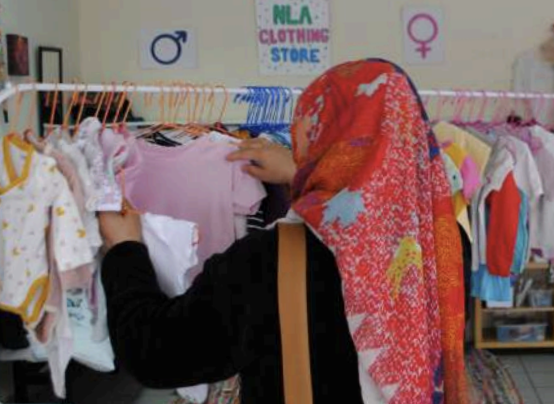
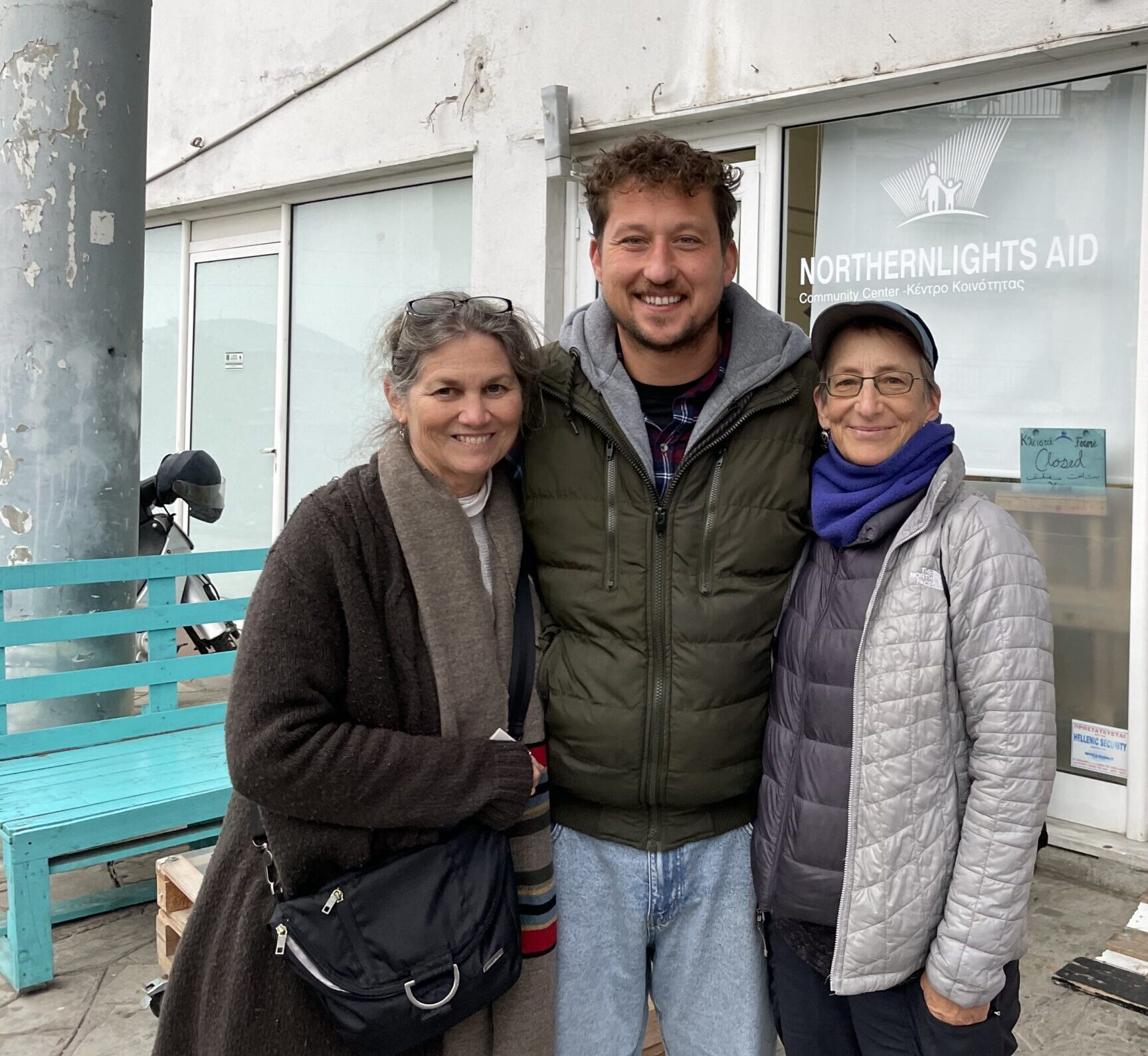
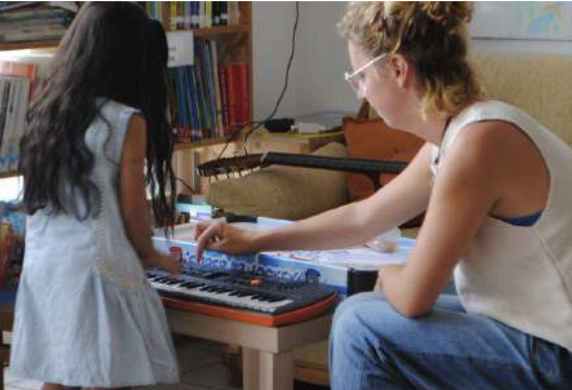
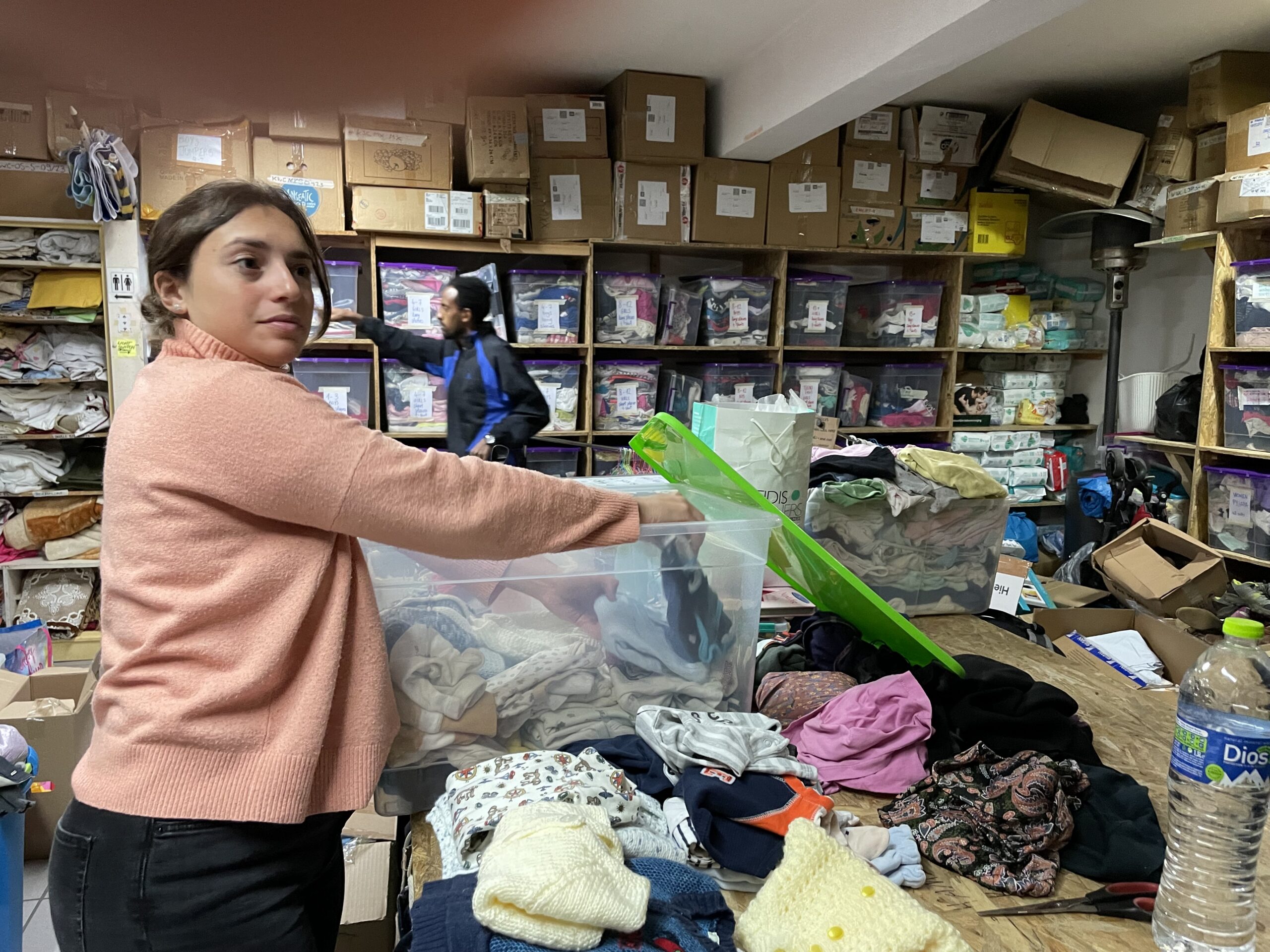
From top: NLA’s free shop; Lefteris Efthimiadis with Jen and Liz; volunteer with child; sorting clothes in the free shop.
Here’s something we say often: Small grants, used effectively, can have tremendous impact.
But, what do we mean, exactly? To explain, let’s look at Northern Lights Aid, based in Kavala, Greece, which supports displaced people living in Asimakopoulou Refugee Camp.
NLA employs four paid staff and operates five projects: a free clothing store, a community center, a baby support program, a medical support program, and a community garden. Among a range of accomplishments last year, the free shop distributed clothing to 4,000 people. The baby program gave out 54,000 diapers.
How can a small team do so much? NLA runs a robust volunteer program to “ensure the smooth operation of daily activities, from booking and running appointments in the Free Store and facilitating activities in the Community Centre, to sorting donations, tending the garden, and maintaining the space.”
Volunteers help NLA thrive on a tiny budget. In 2025, NLA’s income was $143,000. Yes, you read that right. The entire operation ran on just over 1/10th of the yearly salary of David Milliband, President/CEO of International Rescue Committee ($1,246,992 in 2024, according to Charity Watch, and he’s far from the top earner among large nonprofits). We make this comparison not to criticize IRC, but to highlight the value of targeted, small-scale humanitarian investment.
Last year, NLA used a Humanity Now grant of $6,200 to fund a variety of purchases, including display racks for the free shop, sanitary pads, diapers, men’s clothing and shoes, and underwear for new mothers. We consider it money well spent.
Interested in volunteering with NLA? You can find out more here.
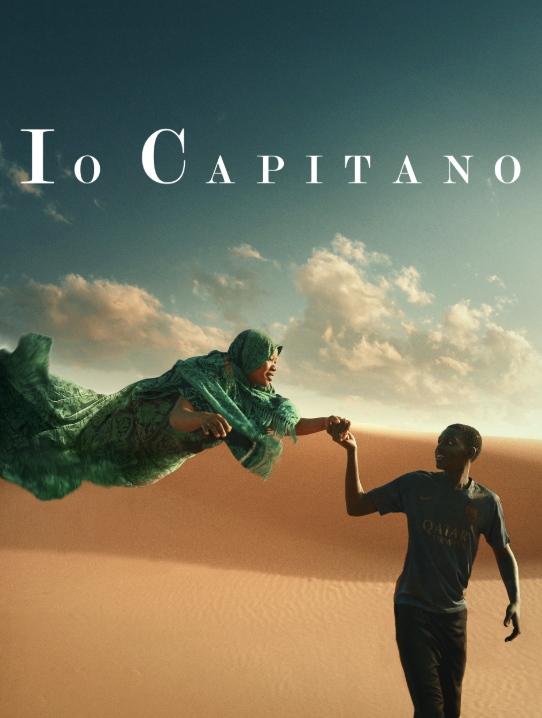
We Recommend: Io Capitano
In Matteo Garrone’s 2024 film Io Capitano, Seydou and Moussa, two 16-year-old Senegalese cousins, decide to leave home, almost on a lark, because they dream of distant lands. What the boys discover as they journey through Niger, then Libya, and finally by boat to Italy, is the horror and hardship of global migration, where human lives become commodities to be traded like any other goods. The film isn’t easy to watch, but it demonstrates human resilience. We were mesmerized by Seydou and Moussa, played by nonprofessionals Seydou Sarr and Moustapha Fall. These characters are not archetypal “migrants,” but, rather, starry-eyed and impetuous teenagers who make bad choices while looking for adventure. The four of us in Humanity Now–collectively, the mothers of seven boys–pondered the lives of our own sons if fate had made us Senegalese instead of American.