
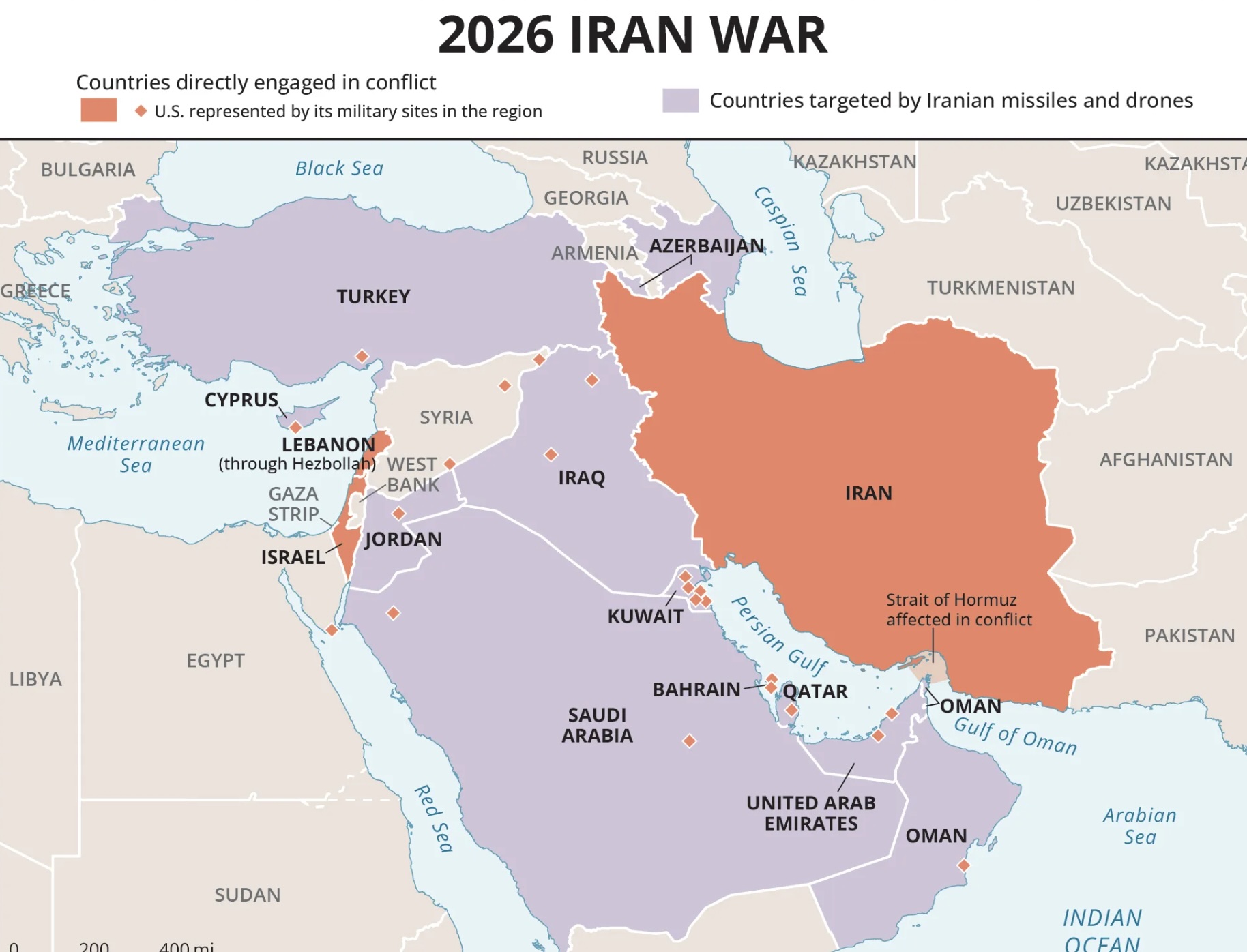
The war region as of March 21, 2026
Map by Encyclopædia Britannica
As we write, the war with Iran has expanded to include attacks and counter-attacks throughout the region, spreading to at least 12 countries. How might this new catastrophe affect global displacement? That was a question we were asking ourselves as we read horrifying headlines like one in The New York Times that said, “Nearly 700,000 Flee Israeli Strikes in Lebanon.”
Clearly, this new conflict will have wide-ranging effects, not only on countries of the Middle East, but also, less directly, on Europe. Greece, in particular, absorbs many refugees, which is why Humanity Now funds so many projects there. At the moment, our partners see little indication of a new large-scale movement toward Greece. However, if the war continues we’re more likely to see a new migration crisis.
One fact that hasn’t gotten much attention in U.S. media coverage of this war: the effect it will have on people who are already displaced. According to the United Nations, some 4.5 million refugees live in Iran right now, most of them from Afghanistan. In times of war, refugees are extremely vulnerable because they tend to live in precarious conditions, don’t have secure legal standing, and rely on substandard housing. Marina Liaki, one of our humanitarian colleagues in Greece, considers the situation for Afghans particularly tragic because they’ve already experienced war and disruption. She notes that they “have been like second class citizens, not even citizens at all of Iran, and they have suffered so much already.” If this war forces them to flee again, they’ll experience even more pain and suffering.
We Recommend:
The New Yorker recently published Elizabeth Flock’s “The Migrants in the Ancient Forest,” a revealing primer on migration along the increasingly militarized Poland-Belarus Border, where Humanity Now supports aid efforts. Flock describes harrowing experiences. One young Somali man, called “Ahmed” in the article, climbed a ladder to scale an 18-foot border fence, broke bones while jumping down, then travelled for two days over 20 miles of dense forest before being caught by Polish border guards. Why would anyone make such a terrible journey? Because the terrorist group Al Shabab had killed Ahmad’s father in Mogadishu, and then went after him, too. In her article, Flock discusses how militarizing migration is dehumanizing all of us. After the Polish government limited access to medical workers, humanitarian aid teams, and journalists, one Polish journalist observed that these measures undermine the values of an open society. “I’m in a democratic country, covering something happening before my eyes that’s very significant, and suddenly: ‘You cannot see it, so you cannot report on it, because you cannot see it.’ ”
We Got to Hang Out with You in February and March
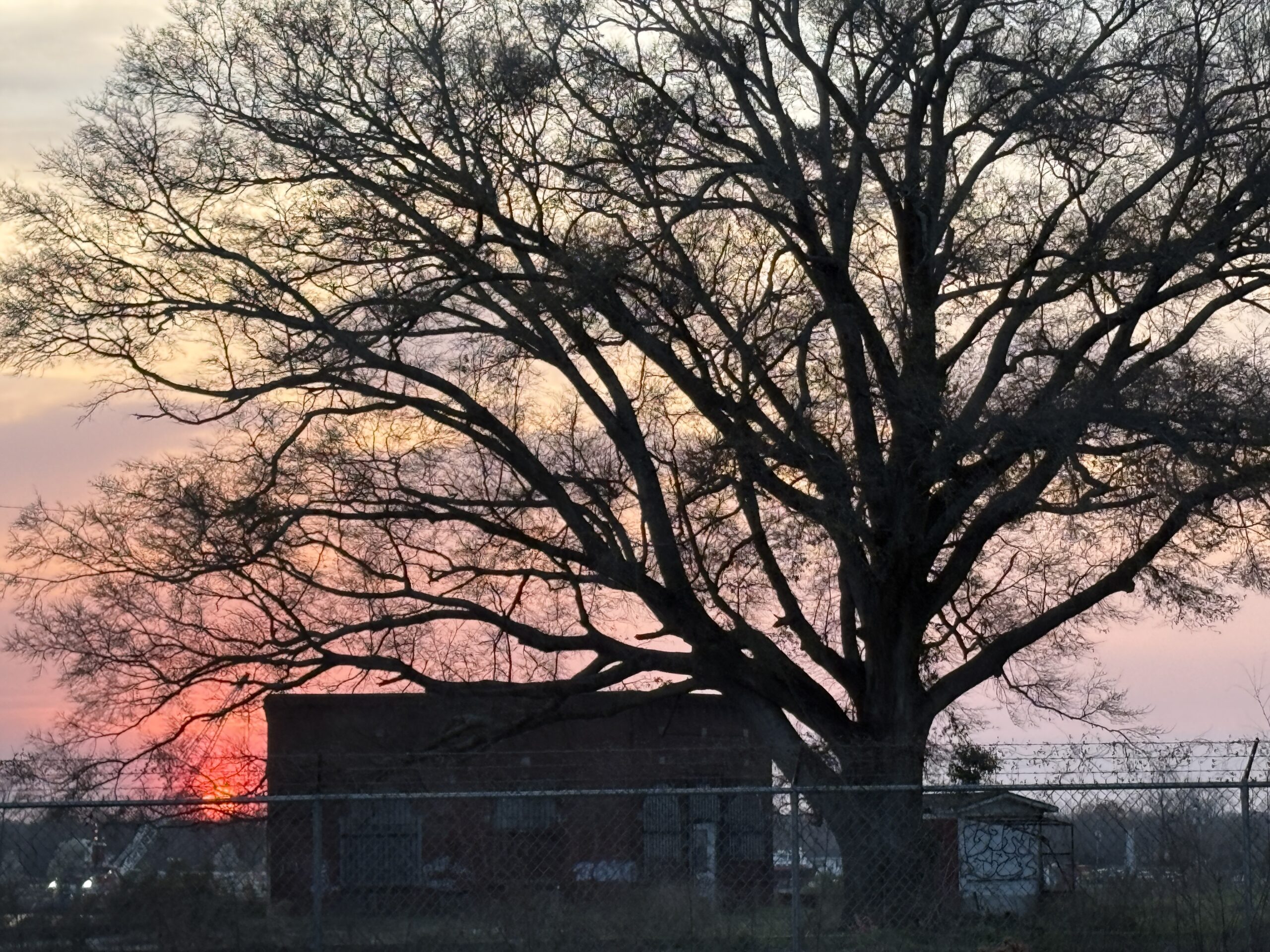
Humanity Now had two gatherings over the past few weeks, one in Memphis and one in Wilmington, NC. Dana spoke at the Memphis event, which was hosted by her mom, Diane Sachs, and attended by long-time donors and newcomers curious to learn more about Humanity Now. In Wilmington, Jen and Dana hosted an event at Waterline Brewing overlooking the Cape Fear River. Friends heard our latest news, then stayed with us for beers, burgers, and music. We’re posting a beautiful photo that one guest, Elizabeth Rogers, sent us afterwards of the sunset outside the event space. We loved the reminder of how we can find beauty at unexpected moments. Thanks to everyone who joined us.
